
A customer service knowledge exam is a structured assessment that measures your ability to apply communication skills, policy judgment, empathy, and problem-solving under realistic conditions. These exams go well beyond fact recall. Employers and certification bodies use them to confirm you can handle real customer interactions, not just define industry terms. Whether you are preparing for the ServiceNow CIS-CSM, a Salesforce Service Cloud credential, or an internal company assessment, the path to pass a knowledge exam in customer service runs through deliberate, skills-focused preparation.
What core skills are tested on customer service knowledge exams?
Customer service knowledge exams test communication, problem-solving, judgment, empathy, de-escalation, professionalism under pressure, and policy adherence. That list matters because most candidates study only product knowledge and miss the behavioral dimensions that carry the most scoring weight.
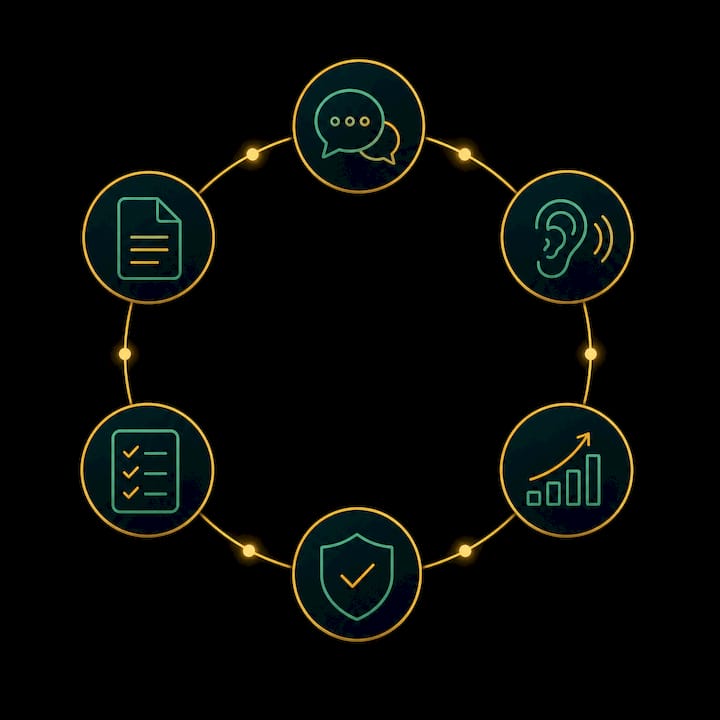
Evaluators look for six core competency areas:
-
Empathy and tone: Your response must acknowledge the customer’s emotion before moving to a solution.
-
Active listening: Demonstrated by asking clarifying questions rather than assuming facts.
-
Clear communication: Answers must be structured, free of jargon, and easy for a customer to follow.
-
De-escalation: Knowing when and how to lower tension without abandoning policy.
-
Policy alignment: Resolving issues within approved procedures, not around them.
-
Ownership and documentation: Confirming next steps and logging the interaction accurately.
The difference between conceptual knowledge and behavioral demonstration is where most candidates lose points. Knowing that “empathy is important” is not the same as writing a response that opens with a genuine acknowledgment of the customer’s frustration before offering a resolution path. Exams score the behavior, not the belief.
Effective customer service representatives actively listen, empathize, make informed decisions, and handle conflicts professionally. That combination of skills is exactly what rubric-based scoring systems are designed to surface.
Pro Tip: Before your exam, write out three sample responses to difficult customer scenarios. Read each one aloud and ask whether a frustrated customer would feel heard. If the answer is no, revise the opening sentence.
How can simulation practice improve your readiness?
Realistic practice is the single most effective preparation method for a customer service skills evaluation. Reading study guides builds awareness. Simulating actual interactions builds the muscle memory that exams measure.
The evidence for simulation-based preparation is concrete. Agents using AI simulations saw up to 57% higher sales conversion rates in their first 30 days, with the lift holding around 33% at 60 days, in a 2026 Liveops deployment for an insurance client. The metric there is on-the-job conversion, not exam scores, but it shows what repeated live practice builds: the call-handling skill that the simulation portion of these exams measures directly. That gap reflects the difference between knowing what to do and being able to do it under pressure.
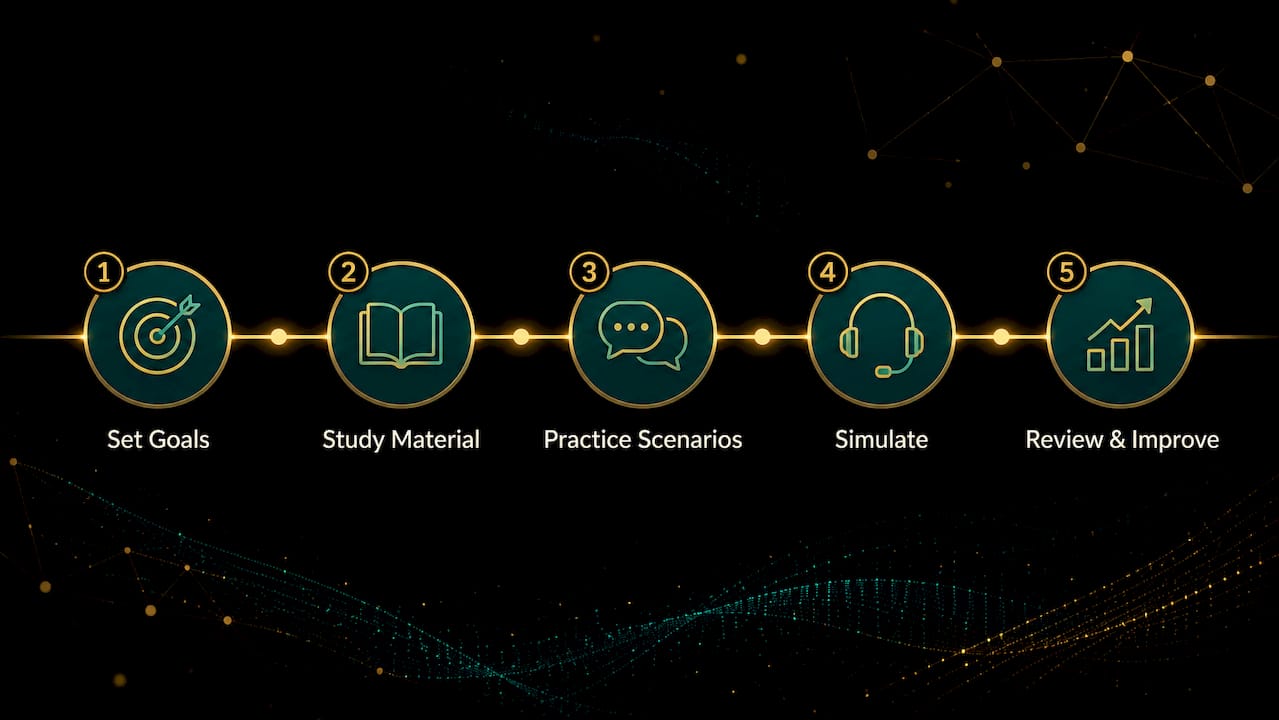
Simulation tools like those used in the Liveops certification program work because they create repeated, low-stakes practice cycles. Each cycle gives you performance feedback, so you can identify exactly where your responses fall short before exam day. Repeated AI-driven scenario practice aligns with certification standards and improves both readiness and quality metrics. That is a meaningful distinction from one-time knowledge checks.
Practical ways to use simulation in your preparation:
-
Run at least 10 full scenario cycles before your exam date, covering different customer types and issue categories.
-
Record your responses and review them against the rubric dimensions: empathy, clarity, policy alignment, and ownership.
-
Use sandbox environments for operational exams like the Salesforce Service Cloud Consultant credential, where configuring omni-channel routing on the job is tested directly.
-
Simulate time pressure by setting a timer during practice. Most certification exams impose strict time limits.
Pro Tip: After each simulation session, write down the one rubric dimension where your score was lowest. Focus your next session entirely on improving that single area before moving on.
What question types appear on these exams, and how should you answer them?
Customer service knowledge assessments use four main question formats. Each one requires a different approach.
-
Situational judgment questions present a customer scenario and ask you to select the best response from four options. The correct answer always demonstrates empathy first, then policy resolution. Eliminate any option that skips acknowledgment or escalates prematurely.
-
Multiple-choice knowledge questions test product features, process steps, and policy details. These reward direct study of official materials. For the ServiceNow CIS-CSM, the exam covers 60 multiple-choice questions in 90 minutes across five domains, so time management is as important as content knowledge.
-
Written communication exercises ask you to draft a customer email or chat response. Evaluators score tone, structure, and clarity. Short paragraphs, a direct opening, and a clear next step are the three non-negotiable elements.
-
Live or recorded simulations measure real call-handling skill. Your pacing, tone, and ability to stay on policy while sounding human are all scored.
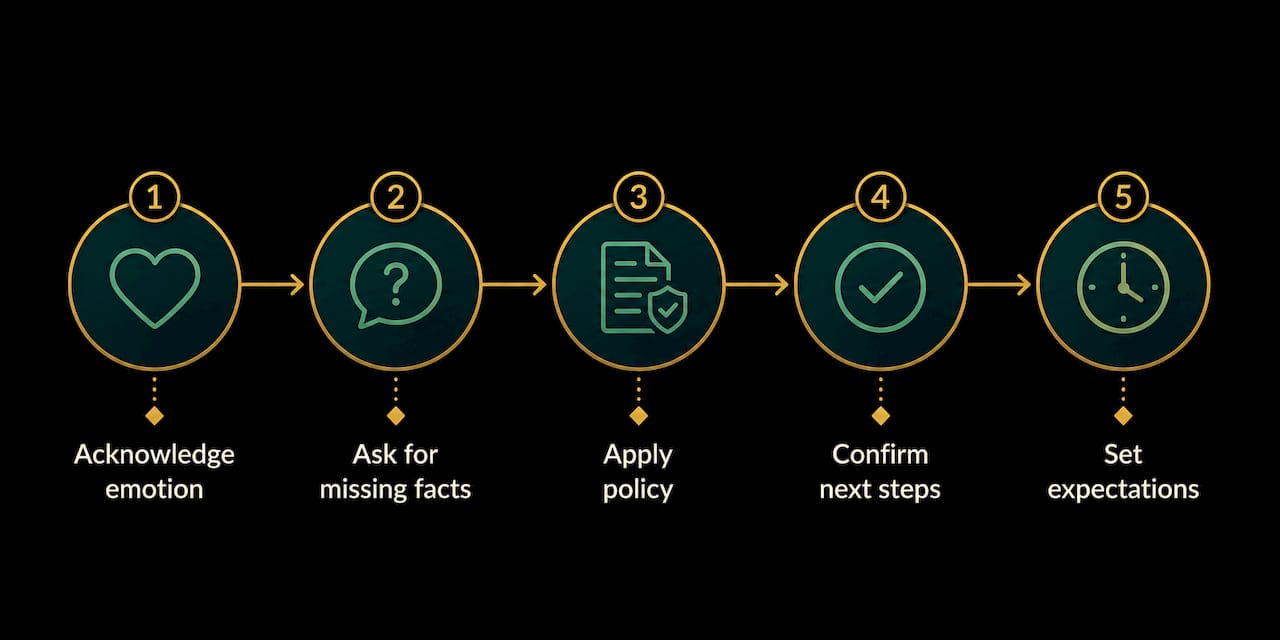
The most reliable way to answer scenario questions is to follow a consistent micro-sequence. Rubric scoring includes empathy and tone, clarity and structure, information gathering, policy alignment, and ownership, each scored on a 0 to 4 scale. Aligning your answer structure to those dimensions reduces scoring variance.
| Question type | Core scoring focus | Common mistake |
|---|---|---|
| Situational judgment | Empathy first, then policy | Jumping to resolution without acknowledgment |
| Multiple choice | Accuracy and process knowledge | Confusing similar policy steps |
| Written communication | Tone, structure, and clarity | Vague next steps or overly formal language |
| Live simulation | Call flow and natural tone | Sounding scripted or rushing past the customer |
The micro-sequence that covers all rubric dimensions is: acknowledge the emotion, ask for any missing facts, apply the policy path, confirm next steps, and set clear expectations. Practice that sequence until it becomes automatic.
What study tools and plans best support passing the exam?
A structured study plan outperforms unguided reading every time. The plan should combine three activities: reading official materials, completing practice questions, and hands-on configuration or simulation work.
| Study activity | Recommended frequency | Purpose |
|---|---|---|
| Official exam guide review | Daily for the first two weeks | Build domain knowledge across all tested areas |
| Practice question sets | Every other day | Identify weak areas and reinforce correct reasoning |
| Simulation or sandbox sessions | Three times per week | Build behavioral skill and operational confidence |
| Timed mock exam | Once per week | Simulate real exam pressure and track progress |
| Weak area review | After every mock exam | Close specific gaps before the next practice cycle |
For platform-specific exams, official guides are non-negotiable. ServiceNow recommends substantial hands-on experience before attempting the CIS-CSM, so reading alone will not get you there. Salesforce Service Cloud candidates who study only concepts miss routing model questions. Configuring at least one end-to-end setup in a sandbox is the recommended standard for passing that section.
Log your weak areas after every practice session. A simple spreadsheet with the domain name, the question you missed, and the correct reasoning is enough. Reviewing that log the night before your exam is more valuable than re-reading an entire chapter.
How do you avoid the most common preparation mistakes?
Most candidates who fail a customer service knowledge assessment make one of five identifiable mistakes. Recognizing them early saves significant preparation time.
-
Over-relying on memorization. Exams score behavioral responses, not definitions. Memorizing the five steps of de-escalation does not help if you cannot apply them in a written scenario under time pressure.
-
Ignoring escalation procedures. Balancing ownership with clear escalation behaviors is a nuanced but critical passing factor. Candidates who either over-escalate or under-escalate lose points on policy alignment.
-
Skipping hands-on practice for operational exams. Routing models and knowledge management configurations cannot be learned from a PDF. You need to build them in a sandbox environment to answer those questions accurately.
-
Practicing without time pressure. Exam anxiety is real, and it affects performance. Simulate the actual time constraints during every mock exam, not just the final one.
-
Neglecting the written communication section. Many candidates focus entirely on scenario questions and arrive unprepared for email or chat drafting exercises. Tone and structure are scored as heavily as content accuracy.
Preparation should emphasize effective behavioral responses and policy-aware resolutions rather than rote memorization. That principle applies to every exam format, from internal company assessments to formal certifications like the CRSA from ATAC Global CX.
Key Takeaways
Passing a customer service knowledge exam requires behavioral preparation, realistic simulation practice, and a structured study plan aligned to the specific rubric dimensions evaluators score.
| Point | Details |
|---|---|
| Behavioral skills outweigh memorization | Exams score empathy, policy alignment, and ownership, not just factual recall. |
| Simulation practice drives results | AI-driven scenario practice produces stronger real-world results than concept study alone. |
| Use the rubric micro-sequence | Acknowledge, clarify, resolve within policy, confirm next steps, and set expectations every time. |
| Hands-on experience is required | Platform exams like ServiceNow CIS-CSM and Salesforce Service Cloud demand sandbox configuration work. |
| Log and close weak areas | Tracking missed questions by domain and reviewing them before exam day closes the most critical gaps. |
What I have learned about passing these exams
The candidates I have seen struggle most are not the ones who studied the least. They are the ones who studied the wrong things. They memorized policy documents word for word, then froze when a scenario question asked them to choose between two technically correct responses that differed only in tone.
The rubric micro-sequence changed how I think about exam preparation entirely. When you know that evaluators are scoring five specific dimensions, you stop writing what feels natural and start writing what covers every dimension deliberately. That shift from instinct to structure is uncomfortable at first. It feels mechanical. But after enough practice cycles, it becomes second nature, and your scores reflect it.
Simulation-based preparation is not optional for anyone serious about passing. Performance gains in certification come from repeated, realistic practice aligned to test standards, not from reading rules once. The Liveops data makes that point clearly. A 57% lift in sales conversions at 30 days is not a marginal difference. It is the difference between a candidate who is ready and one who is not.
My honest advice: treat the exam as a performance, not a test. You are not trying to recall information. You are demonstrating a skill set that you have built through deliberate, structured practice. The credential you earn at the end is proof that the skill is real, and proof travels with you to every role you take on.
Adrian Smith, Co-Founder & VP, ATAC Global CX
ATAC Global CX and your certification readiness
Earning a credential that employers and BPOs can trust requires more than passing a written test. ATAC Global CX certifies remote customer service agents through the CRSA (Certified Remote Service Agent) credential, which combines a knowledge exam with a live voice simulation that measures real call-handling skill.
Every CRSA credential is verified on blockchain, giving you portable, fraud-proof proof of your readiness that travels with you across roles and borders. Employers can verify your credential instantly before you go live, removing the friction that slows down hiring. If you want to measure where you stand before exam day, the remote CX readiness assessment from ATAC Global CX gives you a clear picture of your current skill level and the gaps worth closing. Talent is everywhere. Verified proof of that talent is what opens doors.
FAQ
What does a customer service knowledge exam actually test?
Customer service assessments test communication, empathy, de-escalation, policy adherence, judgment, and professionalism under pressure. They go beyond product knowledge to measure how you behave in real customer interactions.
How long should I study for a customer service certification exam?
ServiceNow recommends substantial hands-on experience before sitting the CIS-CSM exam. For most knowledge assessments, a structured four-to-six-week plan combining daily reading, practice questions, and simulation sessions is the recommended minimum.
Do AI simulations actually help you pass?
Yes. In a 2026 Liveops deployment, agents who trained on simulations before going live saw up to 57% higher sales conversion rates at 30 days. Repeated scenario practice builds the behavioral skills that exams score directly.
What is the rubric micro-sequence for scenario answers?
The micro-sequence is: acknowledge the customer’s emotion, ask for missing facts, apply the policy resolution, confirm next steps, and set clear expectations. Following this sequence aligns your answer to every rubric dimension evaluators score.
How do verifiable credentials support my exam results?
Verifiable credentials give employers and BPOs instant, fraud-proof confirmation of your certification. ATAC Global CX issues blockchain-verified CRSA credentials so your proof of skill is portable and trusted across every role you apply for.